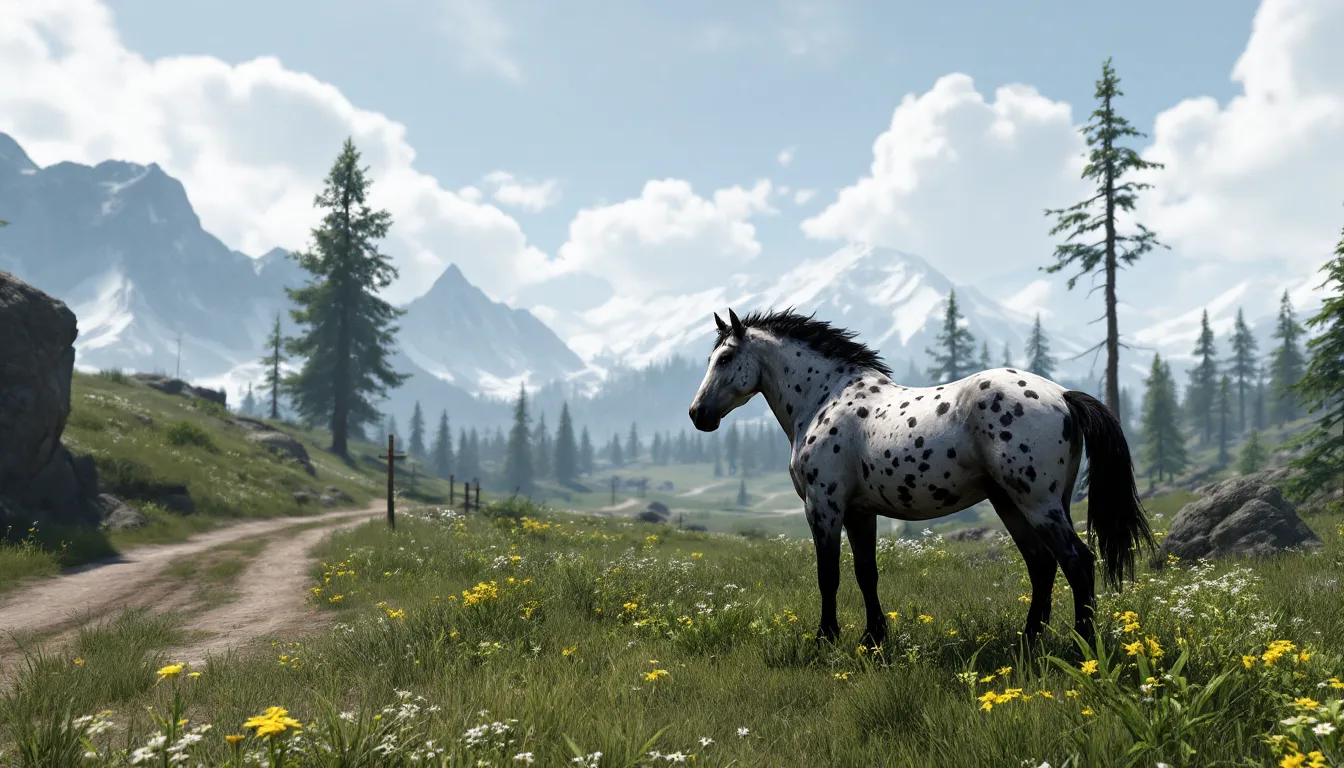
Wild horses in Skyrim changed how players approach mounted travel when they first arrived with the Anniversary Edition in 2021. Instead of buying a horse from a stable or summoning Arvak, players can now track down and tame their own mount in the wilderness. But finding these creatures isn’t as simple as wandering the roads, wild horses spawn in specific locations under certain conditions, and taming them requires understanding mechanics that the game doesn’t explicitly explain.
This guide covers everything from spawn points and taming techniques to stats comparisons and post-taming management. Whether you’re hunting for a specific coat color or just want a free alternative to the 1,000 gold stable horses, you’ll find the exact details you need to make wild horses work for your playthrough.
Table of Contents
ToggleKey Takeaways
- Wild horses in Skyrim are free mounts available in the Anniversary Edition and Survival Mode that can be tamed without gold or quests, making them a practical alternative to stable purchases.
- Successful wild horse taming requires approaching slowly without weapons drawn, with spawn locations concentrated near Whiterun, the Rift, and Eastmarch away from settlements.
- Wild horses have identical stats (292 health, 148 stamina) to purchased stable horses and spawn in six cosmetic coat variations—Bay, Black, Dapple Gray, Palomino, White, and Chestnut.
- Unlike the respawning Shadowmere or summonable Arvak, wild horses are mortal and will permanently die in combat, requiring you to find a replacement or switch to a different mount option.
- PC players can use console commands to spawn specific wild horse colors by BaseID, while mod enhancements like Convenient Horses add whistle summoning and improved AI mechanics for better horse management.
What Are Wild Horses in Skyrim?
Wild horses are untamed mounts that spawn naturally across Skyrim’s wilderness. Unlike the horses you purchase from stables or receive through quests, wild horses must be approached carefully and tamed before they’ll accept a rider. They were introduced as part of the Survival Mode update and later became a core feature of the Anniversary Edition.
The biggest difference? Wild horses are free. No gold required, no quest completion needed. You just need to know where to look and how to approach them without spooking them.
Wild Horses vs. Regular Horses: Key Differences
Regular horses purchased from stables come pre-tamed and ready to ride. They cost 1,000 gold at most major cities, Whiterun, Solitude, Windhelm, Markarth, and Riften all have stable masters selling identical horses with the same base stats.
Wild horses, by contrast, require a taming process. They’ll flee if you sprint toward them or draw a weapon. Once tamed, they function identically to purchased horses in terms of mechanics, same carrying capacity, same combat behavior, same tendency to charge headfirst into dragon fights.
The stat difference between wild and stable horses is negligible. Both have 292 health and 148 stamina by default. The real distinction is cosmetic: wild horses come in coat variations you can’t buy from stables, which we’ll cover in detail later.
Which DLCs and Versions Include Wild Horses
Wild horses first appeared in the November 2021 update that accompanied the Anniversary Edition release. They’re available in:
- Skyrim Anniversary Edition (PC, PS4, PS5, Xbox One, Xbox Series X
|
S, Switch)
- Skyrim Special Edition with the Survival Mode Creation Club content installed
If you’re playing the original 2011 Skyrim or Special Edition without the Anniversary upgrade or Survival Mode, wild horses won’t spawn naturally. You’ll need either the full Anniversary Edition or the free Survival Mode Creation Club download (which has been free since November 2021).
Players on PC can also add wild horses through mods if they don’t have the Anniversary Edition, but those function differently and won’t follow the vanilla spawn rules covered in this guide.
Where to Find Wild Horses in Skyrim
Wild horses don’t spawn randomly, they appear in specific wilderness areas, usually near roads but far enough from settlements that you won’t stumble across them casually. Knowing the exact spawn points saves hours of aimless wandering.
Confirmed Wild Horse Spawn Locations
Wild horses spawn in small herds, typically 2-3 animals grazing together. Here are the most reliable locations:
The Rift:
- East of Ivarstead, along the road toward the Rift’s central region
- Near the hot springs south of Riften, between Honeystrand Cave and the southern border
- North of Heartwood Mill, in the plains area
Whiterun Hold:
- Southwest of Whiterun, in the plains between the city and Rorikstead
- Near the Western Watchtower (the tower you defend during the dragon attack early in the main quest)
- Along the road between Whiterun and Rorikstead, roughly halfway
Eastmarch:
- East of Windhelm, in the volcanic tundra near the Dunmeth Pass border
- South of Windhelm Stables, in the open fields
Hjaalmarch:
- Near Morthal, in the marshlands west of the city
- Along the road between Morthal and Ustengrav
The Pale:
- East of Dawnstar, in the snowy plains
- Near the Nightgate Inn area
The most consistent spawn point, based on community reports, is the plains southwest of Whiterun. Fast travel to Rorikstead and walk east along the road, or fast travel to Whiterun Stables and head southwest into the open grassland.
Best Times and Conditions for Spawning
Wild horses spawn during both day and night cycles, but visibility matters. Daytime makes them easier to spot against the landscape, especially in areas with tall grass like the Rift.
Some players report increased spawn rates during clear weather, though this hasn’t been definitively confirmed by data mining. What is confirmed: wild horses won’t spawn if you’re too close to a major city or settlement. They need open wilderness, which is why you won’t find them within Whiterun’s walls or near the stables.
If you fast travel to a known spawn location and don’t see horses, try waiting 24-48 in-game hours and checking again. Cell respawn timers can affect wild horse appearances, especially if you’ve recently cleared enemies or looted containers in the same area. Players tracking down memorable encounters in the open world often notice that wildlife spawns, including horses, refresh more reliably after waiting or traveling to a distant location first.
How to Tame Wild Horses
Taming a wild horse is simple in theory but easy to mess up in practice. The game doesn’t give you a tutorial prompt, so most players spook their first attempt by moving too aggressively.
Step-by-Step Taming Process
Here’s the exact method that works every time:
-
Locate a wild horse. They’re usually grazing or standing still, occasionally walking in small circles.
-
Sheathe all weapons. If you have a weapon drawn, even a bow, the horse will spook and run.
-
Approach slowly. Walk (don’t sprint) directly toward the horse. You can jog, but sprinting will trigger the flee behavior.
-
Get within interaction range. When you’re close enough, a prompt will appear: “Tame [Horse]” or “Mount [Horse]” depending on your UI.
-
Activate the prompt. Your character will mount the horse. There’s no skill check, no feeding required, no item needed. Just mount.
-
Ride for a few seconds. Once mounted, the horse is tamed. You can dismount and it will follow basic horse AI, staying near you, fleeing from combat initially, etc.
That’s it. No broken mechanics, no hidden stamina bar, no consumables. The entire process takes about 10 seconds once you’re in position.
Common Taming Mistakes to Avoid
Sprinting toward the horse: This is the #1 reason players fail on their first attempt. Wild horses have a detection radius. Sprint within it, and they bolt. Once a horse starts running, it’s nearly impossible to catch on foot. You’ll need to either wait for it to stop (which can take a long time) or reload a save.
Having a weapon drawn: Even if you’re sneaking, a drawn weapon will spook the horse. Sheathe everything before you get close.
Trying to tame during combat: If you’re in combat mode, even if enemies are far away, the game won’t let you mount. Clear any nearby threats first.
Attacking the horse: Obvious, but worth stating. If you hit a wild horse, it becomes hostile and will kick you. Once hostile, it can’t be tamed. You’ll have to find another spawn.
Fast traveling while too close: Fast traveling away and back to reset a spooked horse can backfire. If you fast travel too close to the spawn point, the horse may despawn entirely. Wait instead of fast traveling if you need to reset.
If you’re new to the game and want more foundational guidance before diving into advanced mechanics, understanding how to approach basic gameplay systems can help you avoid common pitfalls that trip up first-time players.
Wild Horse Types and Coat Variations
One of the main reasons players hunt wild horses instead of buying from stables is the variety of coat colors. Stable horses are locked to a single brown coat with minimal variation. Wild horses come in multiple colors, each spawning with equal rarity in the wild.
Available Colors and Patterns
Wild horses spawn in six coat variations:
-
Bay: Reddish-brown body with black mane, tail, and lower legs. The most common wild horse color, visually similar to stable horses but with slightly darker tones.
-
Black: Solid black coat with black mane and tail. Stands out dramatically against snowy environments like the Pale or Winterhold.
-
Dapple Gray: Light gray body with darker dappling (spots/patches) across the coat. Black mane and tail. One of the most visually distinct coats.
-
Palomino: Golden or cream-colored body with white mane and tail. Rare enough that some players farm spawn points specifically for this color.
-
White: Solid white coat with white mane and tail. Not as bright as Shadowmere’s eyes or Arvak’s soul-infused glow, but still striking. Blends into snowy terrain, which can be a problem if you lose track of it during a fight.
-
Chestnut: Warm brown coat, lighter than bay, with matching brown mane and tail. Often confused with bay at a distance.
Each coat has identical stats. Color is purely cosmetic, so pick based on personal preference or roleplay.
Rare and Unique Wild Horse Breeds
Within the Anniversary Edition base content, there are no “rare” breeds, all coats spawn with equal probability at wild horse locations. But, the Creation Club adds several unique horse variants, which we’ll cover in the dedicated Creation Club section.
Some players report anecdotal patterns, like palomino horses spawning more often in the Rift, or black horses appearing more frequently in Eastmarch, but data mining hasn’t confirmed location-based coat biases. It’s pure RNG.
If the wild horse you tamed isn’t the color you want, you have two options: find another spawn and tame a second horse (your previous mount becomes non-owned), or use console commands on PC to spawn a specific coat. For players looking to enhance their playthrough with creative approaches, hunting for specific coat colors adds an optional challenge similar to shiny hunting in other RPGs.
Wild Horse Stats and Performance
Stats matter when you’re deciding whether to stick with a wild horse or hunt down Shadowmere, Arvak, or one of the Creation Club mounts. Here’s the exact breakdown.
Speed, Stamina, and Health Comparison
All vanilla wild horses share identical stats:
- Health: 292
- Stamina: 148
- Speed: Base movement speed matches all other standard horses in Skyrim
These stats are identical to purchased stable horses. There’s no mechanical difference between a wild horse you tamed near Whiterun and a horse you bought from Skulvar Sable-Hilt at the Whiterun Stables. Both will get you from point A to point B at the same pace, both will tire out after the same amount of sprinting, and both will drop to the same threats.
Wild horses don’t level with the player. A horse tamed at level 1 has the same stats as a horse tamed at level 50. This is consistent with how all non-unique horses work in Skyrim.
How Wild Horses Compare to Shadowmere and Arvak
Shadowmere (obtained during the Dark Brotherhood questline) significantly outperforms wild horses:
- Health: 1,637 (more than 5x a wild horse)
- Stamina: 198 (about 33% more)
- Health Regeneration: 6.67 per second (wild horses have standard 0 regen)
Shadowmere also respawns if killed, reappearing near the location of death after roughly 10 in-game days. Wild horses are mortal, if they die, they’re gone unless you have a save to reload.
Arvak (obtained during the Dawnguard DLC quest “Soul Cairn”) offers different advantages:
- Health: 292 (same as wild horses)
- Stamina: 148 (same as wild horses)
- Special Ability: Can be summoned anywhere via spell, doesn’t count as a “owned” horse, can’t be permanently killed
Arvak’s summon-on-demand feature makes him the most convenient mount for players who don’t want to track down their horse after fast traveling or manage ownership mechanics. But, Arvak can’t be ridden in certain areas (like cities) where summoning is restricted.
For pure survivability, Shadowmere wins. For convenience, Arvak wins. Wild horses sit in the middle: free, permanent, and available early, but fragile and tied to ownership mechanics.
Resources like IGN have covered horse comparisons extensively since the Anniversary Edition release, confirming that wild horses fit the “good enough for most playthroughs” category without being the optimal choice for hardcore difficulty runs.
Keeping and Managing Your Wild Horse
Once you’ve tamed a wild horse, it functions like any other owned mount, but Skyrim’s horse ownership system has quirks that trip up even veteran players.
Horse Ownership Mechanics After Taming
When you tame a wild horse, it becomes your owned horse. This triggers several behaviors:
-
Fast travel: If you fast travel while riding your horse, it travels with you. If you fast travel on foot, your horse stays where you left it.
-
City entry: Horses can’t enter cities. When you walk through a city gate, your horse stops outside and waits. It should remain there unless something aggros it, but the AI sometimes wanders.
-
Combat behavior: Your horse will engage enemies if they get close. This usually results in the horse dying, especially against powerful enemies like giants, dragons, or Forsworn ambushes.
-
Replacement: Skyrim only tracks one owned horse at a time. If you tame or buy a new horse, your previous horse becomes “released” and will no longer fast travel with you. The old horse doesn’t disappear, it just becomes a neutral NPC that stays wherever you left it.
Important note: Horses don’t have a “return to stable” feature. If you leave your wild horse on a mountain during a dungeon crawl, it’ll stay on that mountain until you go back or fast travel while riding a different mount.
What Happens If Your Wild Horse Dies
Unlike Shadowmere, wild horses don’t respawn. If your horse dies, it’s permanent. You’ll see the death notification in the corner of the screen, and the body will remain in the world for a while before despawning.
Options after your wild horse dies:
-
Tame another wild horse. Go back to a spawn location and repeat the taming process. No penalty, no cooldown.
-
Buy a replacement from a stable. Costs 1,000 gold but immediately available in major cities.
-
Continue on foot. Horses are convenient but not mandatory. Many players prefer traveling on foot for better exploration and loot discovery.
-
Use Arvak. If you have Dawnguard and completed the Soul Cairn quest, Arvak is always available via summon spell.
There’s no way to “revive” a dead wild horse without console commands or mods. The game treats them as mortal NPCs, not essential quest objects. For players interested in improving their core gameplay knowledge, understanding horse ownership mechanics early prevents frustration when a favorite mount inevitably charges into a bear fight and gets mauled.
Wild Horses in the Creation Club and Anniversary Edition
The Anniversary Edition bundled dozens of Creation Club mods, some of which expanded or altered wild horse content. If you’re playing with the full AE package, you’ve got more options than the base wild horse system.
Creation Club Wild Horses Content
The Survival Mode Creation (included free in both SE and AE as of November 2021) is what introduced wild horses to the game. It ties into the survival mechanics, cold weather, hunger, fatigue, but the horses themselves function independently of survival difficulty settings. You can tame wild horses with Survival Mode turned off.
Beyond the base wild horses, several Creation Club packs add unique mounts that spawn in the wild or are obtained through short quests:
-
Wild Horses Creation (standalone): If you don’t have AE but bought this specific Creation from the CC store, you get the same six wild horse coats described earlier.
-
Saturalia Holiday Pack: Adds a unique Reindeer mount available during the holiday season in-game. Not technically a horse, but follows similar mechanics.
-
Cause Creations (Assorted): Some Cause-related Creations add faction-specific horses or armored mounts, though these are typically quest rewards rather than wild spawns.
The Anniversary Edition doesn’t add exclusive wild horse coats beyond the original six. If you see screenshots of horses with barding, elaborate armor, or glowing effects, those are from specific Creation Club content (like the Divine Crusader armor for horses) or mods.
Anniversary Edition Additions and Changes
The AE didn’t fundamentally change wild horse spawning or taming from the Survival Mode implementation. The main difference: AE players get wild horses by default, while Special Edition players needed to manually download the free Survival Mode Creation.
One notable change in the AE release was improved spawn consistency. Early reports from the November 2021 launch suggested wild horses weren’t spawning reliably on consoles, but patches in early 2022 fixed most of those issues. As of 2026, spawn rates are consistent across PC, PlayStation, and Xbox platforms.
If you’re playing on PC, the modding community has built extensively on the wild horse system. Sites like Nexus Mods host dozens of horse overhauls, from realistic breeding mechanics to fantasy variants with elemental effects. Some top-tier mod collections incorporate enhanced horse mods that add new coats, improved AI, and even mounted combat overhauls.
Tips and Tricks for Wild Horse Hunting
Whether you’re farming for a specific coat color or just want to optimize the taming process, these tips streamline the wild horse experience.
Using Console Commands for Wild Horses (PC)
PC players have access to console commands that bypass spawn RNG and taming mechanics. Open the console with the tilde key (~) and use these commands:
Spawn a specific wild horse:
player.placeatme [BaseID] 1
Wild horse Base IDs by coat:
- Bay:
xx000D74 - Black:
xx000D75 - Dapple Gray:
xx000D76 - Palomino:
xx000D77 - White:
xx000D78 - Chestnut:
xx000D79
Replace xx with the load order index for the Survival Mode or Anniversary Edition content, usually FE for most players, but check your mod list if the command doesn’t work.
Example:
player.placeatme FE000D78 1
This spawns a white wild horse directly in front of you.
Set a horse as owned:
If you spawned a horse via console but it’s not registering as owned:
- Click on the horse with the console open to target it.
- Type
setplayerteammate 1to make it follow you. - Type
setownershipto set it as your owned mount.
Console commands disable achievements on Xbox and PlayStation (unless you use mods that re-enable them). PC has no such restriction in vanilla Skyrim.
Mods That Enhance the Wild Horse Experience
If you want to expand beyond the Anniversary Edition’s wild horse system, these mods are community favorites as of 2026:
Convenient Horses (Nexus Mods):
Adds follower AI for horses, whistle summon, inventory management, and loot access while mounted. Widely considered essential for players who use horses regularly.
Immersive Horses (Nexus Mods):
Overhauls horse behavior with realistic AI, mounted combat improvements, and customizable horse gear. Includes wild horse taming enhancements that make the process more skill-based.
Realistic Horse Breeds (Nexus Mods):
Expands wild horse coats to include 20+ realistic breeds based on real-world horses. Each breed has slightly different stats, adding mechanical variety to coat choices.
Horse Armors (Multiple Authors):
Several mods add craftable or purchasable armor for horses, increasing their survivability. Some integrate with the vanilla wild horse system, others require compatibility patches.
Simply Knock (for horse summoning):
While not horse-specific, this mod’s framework has been adapted by other modders to create whistle-summon mechanics for owned horses, similar to how Roach works in The Witcher 3.
Guide resources like Twinfinite regularly update their mod recommendation lists for Skyrim, including horse-related content, so checking current mod rankings is worthwhile before committing to a mod loadout.
For players who prefer to stay within the boundaries of vanilla or lightly modded gameplay, the base wild horse system is perfectly functional. The main limitation, no respawn on death, encourages more cautious play, which some players prefer as a challenge element.
Conclusion
Wild horses in Skyrim offer a no-cost alternative to stable purchases with the added bonus of coat variety. They’re not mechanically superior to purchased horses, and they pale in comparison to Shadowmere or Arvak’s unique perks, but they’re perfectly viable for players who want a mount without spending gold or completing lengthy questlines.
The taming process is straightforward once you know the spawn locations and approach mechanics. Avoiding common mistakes, sprinting, drawn weapons, combat mode, ensures success on the first attempt. From there, managing your wild horse is identical to managing any owned mount, with the same limitations and behaviors.
Whether you’re farming for a palomino coat, testing different mounts for roleplay purposes, or just want a free horse to ride into the sunset, wild horses deliver on the fantasy of taming your own steed in the wilds of Skyrim. Just remember: they’re mortal, they’re skittish in combat, and they will absolutely charge a giant if you’re not paying attention.