Fifteen years after launch, the Skyrim logo remains one of gaming’s most recognizable symbols. That stark dragon emblem, wings spread, mouth agape, has transcended the game itself to become shorthand for open-world RPGs, modding culture, and the “just one more quest” mentality that defines Bethesda’s masterpiece. You’ve seen it on T-shirts at conventions, inked on arms as tattoos, and plastered across countless YouTube thumbnails. But there’s more to this icon than meets the eye. From its Nordic-inspired geometry to its place in Elder Scrolls lore, the Skyrim symbol carries layers of meaning that most players never notice. In 2026, as the game continues to attract new audiences through remasters and community content, understanding the logo’s design, evolution, and cultural footprint offers a window into why this RPG refuses to fade.
Table of Contents
ToggleKey Takeaways
- The Skyrim logo’s minimalist dragon design, inspired by Norse heraldry, prioritizes instant recognition across all media formats and scales, making it one of gaming’s most versatile brand symbols.
- The emblem’s aggressive frontal pose represents both Alduin (the antagonist) and the Dragonborn (the player), creating a duality that reinforces the game’s core narrative tension and central conflict.
- Bethesda’s design restraint—maintaining the original 2011 Skyrim logo design through multiple remasters and editions—demonstrates how consistency and simplicity create lasting brand identity in the gaming industry.
- The logo’s clean geometry and bold shapes have made it exceptionally adaptable for fan creativity, from thousands of tattoos and cosplay applications to widespread merchandising and internet meme culture.
- The Skyrim logo outpaces other Elder Scrolls game icons in cultural penetration because it balances symbolic richness with mainstream accessibility, making it instantly recognizable even to non-players.
The Origins of the Skyrim Logo: How Bethesda Crafted an Instant Classic
Design Philosophy Behind the Dragon Emblem
Bethesda’s art team knew they needed something visceral for The Elder Scrolls V. Previous entries used intricate, ornate symbols, Oblivion’s Ouroboros snake, Morrowind’s stylized “M” sigil, but Skyrim demanded something primal. The dragon head silhouette was conceived as both a threat and a promise: dragons were returning to Tamriel, and the player would face them head-on.
The emblem prioritizes instant recognition over complexity. Unlike busier fantasy logos cluttered with runes or detailed scales, the Skyrim icon strips the dragon down to essential shapes. Two triangular wings frame a snarling head, creating negative space that reads clearly at any size, from a favicon in a browser tab to a billboard at E3. This minimalist approach was intentional. The design team drew inspiration from Scandinavian heraldry, where Viking-age standards featured bold animal shapes meant to be spotted across a battlefield.
The Creative Team and Development Process
While Bethesda hasn’t released exhaustive documentation on the logo’s creation, interviews from the 2011 development cycle reveal that lead artist Adam Adamowicz played a crucial role in defining Skyrim’s visual identity. Adamowicz, who passed away in 2012, left behind concept art that blended historical Nordic aesthetics with high fantasy. The logo emerged from iterative sketches that experimented with different dragon poses, some coiled, some in flight, before settling on the frontal, symmetrical assault that made the final cut.
The process involved close collaboration between the art department and marketing. The emblem needed to function across media: game packaging, launcher icons, promotional materials, and eventually merchandise. Early prototypes reportedly featured more detailed scales and teeth, but these elements were pruned back when the team realized simpler geometry reproduced better across different printing methods and screen resolutions. The result was a logo that worked equally well embossed on a steelbook case or rendered in a 16×16 pixel favicon.
Decoding the Symbolism: What the Skyrim Logo Really Represents
The Dragon as a Central Theme
Dragons aren’t just monsters in Skyrim, they’re the game’s narrative engine. The logo’s dragon represents Alduin, the World-Eater and primary antagonist whose return sets the entire plot in motion. But it also embodies the Dragonborn, the player character who absorbs dragon souls and wields the Thu’um. This duality is baked into the emblem’s aggressive pose: the dragon is simultaneously enemy and avatar, destroyer and savior.
The frontal orientation breaks from traditional fantasy iconography, where dragons are often shown in profile or mid-flight. By confronting the viewer head-on, the Skyrim emblem creates a direct challenge. It’s the visual equivalent of the game’s opening line: “You’re finally awake.” You’re not observing this world from a distance, you’re diving straight into its throat.
Nordic Influences and Viking Aesthetics
Skyrim’s setting borrows heavily from Norse mythology and Viking-age Scandinavia. The logo reflects this through geometric simplification that echoes runestones and carved ship prows. Ancient Norse art favored interlocking shapes and stylized animals, wolves, ravens, serpents, rendered with bold lines suitable for wood carving and metalwork.
The symmetry of the Skyrim symbol mirrors the balance found in Viking-era decorative arts, where creatures were often depicted facing forward in heraldic poses. This wasn’t just aesthetic preference: it served a practical purpose. Symmetrical designs were easier to reproduce consistently across shields, banners, and jewelry, much like modern logo design principles. Bethesda tapped into this visual language to ground their fantasy world in something that felt ancient and earned, rather than generic high fantasy.
The Imperial Dragon Symbol in Elder Scrolls Lore
Within the Elder Scrolls universe, the dragon is deeply tied to the Empire of Tamriel. The Imperial Legion uses a dragon as its standard, representing the divine right and power of the Septim bloodline (and later, the Mede Dynasty). But Skyrim’s logo specifically references the Nordic interpretation of dragons, Dovah in the dragon language, creatures of immense power worshipped as gods during the Merethic Era.
The emblem doesn’t depict a friendly or tamed beast. Its open maw and aggressive stance recall the ancient Dragon Cult, when tyrannical Dragon Priests ruled over human thralls. This darker reading adds weight to the logo’s symbolism: Skyrim isn’t a story about heroic knights and noble dragons. It’s about confronting power, legacy, and the cyclical nature of dominance and rebellion. The logo warns you, this journey won’t be clean or simple.
Breaking Down the Visual Elements: Shape, Typography, and Color
The Dragon Head Silhouette and Wing Geometry
The Skyrim emblem’s strength lies in its shape language. The dragon head forms an inverted triangle, with the snout as the point and the horns/ears widening upward. The wings create two additional triangles, framing the head and generating a roughly pentagonal overall silhouette. These sharp angles convey aggression and danger, no soft curves here.
The negative space between the wings and head is as important as the dragon itself. When rendered in black on white (or vice versa), this empty area creates a visual “gateway” or opening that draws the eye inward toward the center. It’s a compositional trick borrowed from heraldry and modern logo design: the space you don’t fill matters as much as what you draw.
The wings themselves are stylized to near-abstraction. They don’t depict realistic bat-wing anatomy with visible finger bones and membrane. Instead, they’re reduced to three or four primary segments, enough to read as “wings” without cluttering the silhouette. This level of abstraction ensures the logo remains legible when scaled down to thumbnail size or printed on a small pin.
Font Choice and Typographic Impact
The wordmark “SKYRIM” beneath the dragon uses a custom typeface that blends medieval and Nordic influences. The letterforms feature flared serifs and slight calligraphic weight variation, evoking hand-carved runes without going full blackletter (which would’ve been harder to read).
Notice the subtle curves in letters like the “S” and “R”, they’re not rigidly geometric but have a hand-drawn quality that softens the otherwise harsh emblem above. The all-caps treatment reinforces strength and permanence, while the wide letter spacing (tracking) gives each character room to breathe. This prevents the text from feeling cramped or rushed, lending an air of timeless gravitas.
The font scales well across applications. Whether it’s printed on a steelbook spine or displayed in a game launcher, the letterforms remain distinct and readable. Bethesda trademarked this specific wordmark configuration, understanding that typography is half the brand identity.
Color Palette: Why Black, White, and Metallic Gold Work
The core Skyrim logo palette is deceptively simple: black, white, and metallic gold/bronze. Black and white provide maximum contrast, ensuring the emblem pops on any background. The metallic accent, often rendered as a gradient or texture, adds a premium, collectible feel. It evokes aged steel, dragon scales, and the weathered armor you’ll loot throughout the game.
Gold specifically ties into Nordic and Viking aesthetics, where precious metals signified power and divine favor. The color also connects to the game’s currency (Septims) and the numerous golden dragon claws players collect. When Bethesda releases special editions and anniversary content, the gold treatment becomes more pronounced on packaging, reinforcing the game’s status as a modern classic.
Alternate color treatments exist, white-on-black for dark themes, embossed silver for steelbooks, but the core identity remains anchored in that high-contrast, metallic-accented scheme. It’s a palette that communicates both fantasy grandeur and brutal Nordic realism.
Evolution Across Platforms: From 2011 Release to Modern Remasters
Logo Variations Across Special Editions and Anniversary Releases
The original 2011 Skyrim logo has seen subtle refinements through multiple re-releases. The Special Edition (2016) introduced enhanced textures and lighting, and the logo on the launcher and box art received a slight polish, crisper edges, more defined gradients on metallic elements. The core design remained untouched, but the rendering quality improved to match modern display resolutions.
The Anniversary Edition (2021) added a gold banner or laurel accent in some promotional materials, emphasizing the game’s decade-long legacy. Bethesda also introduced variant logos for platform-specific releases: the Nintendo Switch version sometimes featured a red accent to align with Nintendo’s branding, while PlayStation and Xbox versions retained the classic gold-on-black.
These variations follow a smart brand strategy: maintain the iconic silhouette while allowing flexibility for context. Whether it’s a VR edition logo with added depth effects or a mobile port with simplified geometry for small screens, the dragon head remains instantly recognizable. Players encountering the game for the first time in 2026 see the same core emblem that greeted fans fifteen years ago.
How the Logo Adapts for Different Media and Marketing
The Skyrim emblem’s modularity is part of its genius. Marketing teams can isolate the dragon head, pair it with different text treatments, or overlay it on thematic backgrounds, snowy mountains, ancient ruins, aurora borealis, without losing coherence. For video content, the emblem animates beautifully: wings can unfold, the dragon can “breathe” fire, or the entire logo can materialize from mist.
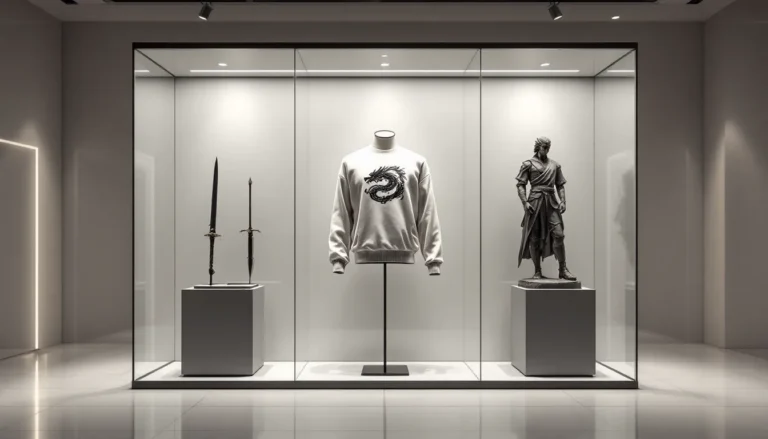
Merchandise applications demanded further flexibility. On apparel, the logo often appears as a monochrome screen print or embroidered patch. For collectibles like Funko Pops or statue bases, it’s rendered in 3D relief. Bethesda even licensed a Skyrim-themed Xbox controller featuring the emblem subtly etched into the faceplate. Each application tests the logo’s resilience, and it consistently delivers.
Digital storefronts presented unique challenges. Steam, GOG, and console dashboards display game icons at various resolutions and aspect ratios. The Skyrim logo’s simple geometry ensures it never looks pixelated or muddled, even at 64×64 pixels. This technical robustness is rare among game logos, many of which rely on fine detail that collapses at small sizes.
The Skyrim Logo in Popular Culture and Fan Communities
Merchandise, Apparel, and Collectibles Featuring the Logo
Walk into any gaming convention, and you’ll spot the Skyrim dragon on at least a dozen T-shirts, hoodies, and hats. Officially licensed apparel from companies like Insert Coin and Numskull has kept the emblem in circulation for over a decade. The logo translates exceptionally well to fabric, screen-printed, embroidered, or appliquéd, because of its high-contrast, bold shapes.
Collectibles range from subtle (enamel pins, keychains) to extravagant (life-size replica helmets with the emblem embossed on the brow). Bethesda’s official store has cycled through hundreds of SKUs featuring the logo, including phone cases, coffee mugs, and even a Skyrim-themed board game where the emblem adorns the box and player mats. Third-party manufacturers on Etsy and Redbubble have created thousands more unofficial items, a testament to the logo’s enduring demand.
The emblem also appears on high-end collectibles. Statues from Gaming Heads and Prime 1 Studio feature the logo on bases or pedestals, while replica weapons like the Dragonbone Sword often include the symbol etched into the blade. For fans building comprehensive collections, the logo serves as a unifying visual thread across disparate product categories.
Fan Art, Tattoos, and Creative Interpretations
The Skyrim logo has inspired an avalanche of fan creativity. DeviantArt, ArtStation, and Reddit’s r/Skyrim are flooded with reinterpretations: steampunk dragons, watercolor renditions, pixel art versions, even mashups with other franchises (“Dark Souls meets Skyrim” logos are surprisingly common). Artists appreciate the emblem’s clean lines, which make it an accessible subject for both digital and traditional media.
Tattoos deserve special mention. A quick search on Instagram reveals thousands of Skyrim logo tattoos, ranging from tiny wrist icons to full back pieces. The emblem’s symmetry and bold shapes translate exceptionally well to skin, and its cultural significance resonates with gamers who want to commemorate a game that shaped their hobby. Some fans combine the dragon head with other Elder Scrolls imagery, Daedric runes, the Eye of Magnus, or quotes in the dragon language, creating personalized compositions anchored by the iconic logo.
Cosplayers incorporate the emblem into armor builds, sewing or 3D-printing the symbol onto capes, shields, and banners. The logo’s in-universe presence, seen on Imperial banners and ancient Nordic carvings, gives cosplayers lore-friendly justification to plaster it everywhere. When you attend PAX or DragonCon, you’re guaranteed to see at least one Dragonborn with the emblem prominently displayed.
Memes and Internet Culture
The Skyrim logo became meme fuel almost immediately. The “Skyrim intro” meme, where unrelated videos cut to the wagon ride opening, often features the logo flashing on screen as the transition cue. This meme has introduced the emblem to audiences who’ve never played the game, cementing its status as a cultural touchstone beyond gaming circles.
Parody logos abound. “Skyrim: Very Special Edition” for Alexa featured a tongue-in-cheek variant of the emblem. Fan-made “Skyrim but…” mods (“Skyrim but it’s entirely Thomas the Tank Engine”) often create custom logo mockups for comedic effect. The emblem’s seriousness makes it ripe for subversion, and the community has embraced that potential.
On Twitch and YouTube, the logo appears in overlays, thumbnails, and channel branding for Skyrim content creators. Channels dedicated to modding guides or speedruns use the emblem as instant visual shorthand: “This is Skyrim content.” The logo’s ubiquity has made it a utility asset for the creator economy.
Comparing the Skyrim Logo to Other Elder Scrolls Game Logos
Each mainline Elder Scrolls game has a distinct logo reflecting its thematic focus. Morrowind (2002) featured an angular, almost Art Deco “M” with sharp corners and alien geometry, mirroring the game’s exotic Dunmer culture. Oblivion (2006) used an Ouroboros, a snake eating its tail, wrapped around a stylized “O,” symbolizing the cyclical nature of the Daedric invasion and the game’s themes of sacrifice and renewal.
Skyrim’s dragon emblem marked a shift toward aggressive, frontal iconography. Where Morrowind and Oblivion leaned on symbolic, almost abstract shapes, Skyrim chose a literal representation of its central threat. This approach made the logo more immediately accessible to mainstream audiences. You don’t need to know Elder Scrolls lore to understand “dragon game.”
The Elder Scrolls Online (ESO, 2014) returned to a more ornate approach, using an intricate “ESO” monogram surrounded by decorative flourishes. It’s designed to appeal to the MMO crowd, emphasizing grandeur and epic scale. The ESO logo is busier than Skyrim’s, reflecting the game’s broader scope across all of Tamriel.
In terms of longevity and cultural penetration, the Skyrim logo outpaces its siblings. Morrowind’s emblem is beloved among hardcore fans but lacks mainstream recognition. Oblivion’s Ouroboros is memorable but doesn’t photograph as well on merchandise. Skyrim’s dragon hits the sweet spot: simple enough for instant recognition, rich enough in symbolism to reward deeper inspection. When comparing Skyrim against other RPGs, the logo often serves as a visual differentiator that even non-players recognize.
Bethesda clearly learned from Skyrim’s success. Promotional materials for The Elder Scrolls VI (still in development as of 2026) have been minimal, but early teasers suggest another bold, simplified emblem. The Skyrim logo set a high bar for brand identity in the series.
How to Use the Skyrim Logo: Legal Guidelines and Fair Use
Official Assets and Where to Find High-Quality Versions
Bethesda provides official press kits for media and content creators, including high-resolution versions of the Skyrim logo in various formats (PNG, SVG, EPS). These kits are typically accessible through Bethesda’s press site or by request for journalism and promotional purposes. The Skyrim logo PNG files include transparent backgrounds, making them easy to overlay on custom designs.
For fans and hobbyists, Bethesda’s official store occasionally releases style guides or asset packs as part of promotional campaigns. The Anniversary Edition launch in 2021 included downloadable wallpapers and icons featuring the emblem. Community resources like the Nexus Mods community also host user-created logo variants and textures, though these aren’t official and shouldn’t be used for commercial purposes.
When sourcing logos for personal projects, desktop wallpapers, Discord server icons, etc., prioritize high-resolution files from reputable sources. Low-quality, upscaled versions introduce artifacts and blur that undermine the emblem’s sharp geometry. A clean vector (SVG or EPS) is ideal for scalability, ensuring the logo looks crisp whether printed on a business card or blown up to poster size.
Trademark and Copyright Considerations
The Skyrim logo and associated wordmark are trademarked by ZeniMax Media Inc. (Bethesda’s parent company, now owned by Microsoft). This means commercial use, selling T-shirts, posters, or any product bearing the logo, without a license is trademark infringement. Bethesda has historically been lenient with fan projects that don’t generate profit, but gray areas exist.
Fair use in the U.S. allows limited use of copyrighted material for commentary, criticism, parody, or education. A YouTube video reviewing Skyrim can display the logo in the thumbnail or overlay without issue. A Twitch streamer can use it in their channel branding if they’re streaming the game. But, printing the logo on merch and selling it at a convention crosses into commercial use, even if you’re a small creator.
If you want to create commercial products featuring the logo, reach out to Bethesda’s licensing department. Official partnerships exist with companies like ThinkGeek (RIP), Funko, and various apparel manufacturers. For non-commercial projects, cosplay armor, fan art prints given away for free, personal tattoos, you’re generally in the clear, though technically Bethesda retains the right to enforce their trademark.
When building beginner-friendly guides or community resources, using the logo in headers or promotional graphics is common practice. Just don’t slap it on a product and sell it without permission. And always credit Bethesda/ZeniMax when using official assets in public-facing projects.
Why the Skyrim Logo Remains Timeless 15 Years Later
Timelessness in logo design boils down to a few core principles: simplicity, relevance, and emotional resonance. The Skyrim emblem nails all three. Its minimalist geometry ensures it won’t look dated as design trends shift. Unlike logos heavy with gradients, drop shadows, or early-2010s gloss effects, the Skyrim dragon relies on fundamental shapes that transcend style eras.
Relevance extends beyond the game’s original release. Skyrim trends in 2026 show that the game continues to attract new players through remasters, mods, and cultural osmosis. The logo benefits from this sustained presence. Every new player who boots up Skyrim for the first time sees that dragon, reinforcing its place in the collective gaming consciousness.
Emotional resonance is trickier to quantify but impossible to ignore. For millions of players, the Skyrim logo represents hundreds of hours of exploration, discovery, and personal stories. It’s the symbol that greeted them before their first dragon shout, their first giant-launched ragdoll, their first “I used to be an adventurer like you…” meme. Logos that tap into genuine emotion, think the Nike swoosh or Apple’s apple, become more than branding. They become shorthand for an entire experience.
The emblem’s staying power also benefits from Bethesda’s restraint. They haven’t redesigned it every few years or cluttered it with modern “improvements.” The 2011 logo is essentially the 2026 logo. In an industry obsessed with reinvention, that consistency is rare and valuable. Players know what they’re getting when they see that dragon.
Finally, the logo’s integration into broader Skyrim culture ensures its survival. As long as modders create new content, streamers boot up the game, and fans share clips, the emblem will circulate. It’s become a symbol not just of the game, but of the open-world RPG genre itself. When critics and enthusiasts analyze what makes RPGs compelling, Skyrim, and by extension, its logo, often serves as the reference point.
Conclusion
The Skyrim logo has achieved what few game icons manage: it’s transcended its source material to become a cultural symbol recognized far beyond gaming circles. From its Norse-inspired geometry to its role in Elder Scrolls lore, every element of the emblem was crafted with intention. Fifteen years on, that dragon head still commands attention on store shelves, convention floors, and streaming overlays.
Whether you’re a veteran Dragonborn or someone who’s never set foot in Whiterun, the logo communicates something universal, adventure, danger, and the promise of a world worth losing yourself in. As Bethesda continues to support the game through community-driven content and remasters, the emblem will keep its place as one of gaming’s most enduring icons. It’s not just a logo. It’s a call to action, a badge of honor, and a reminder that some designs, like some games, are built to last.